

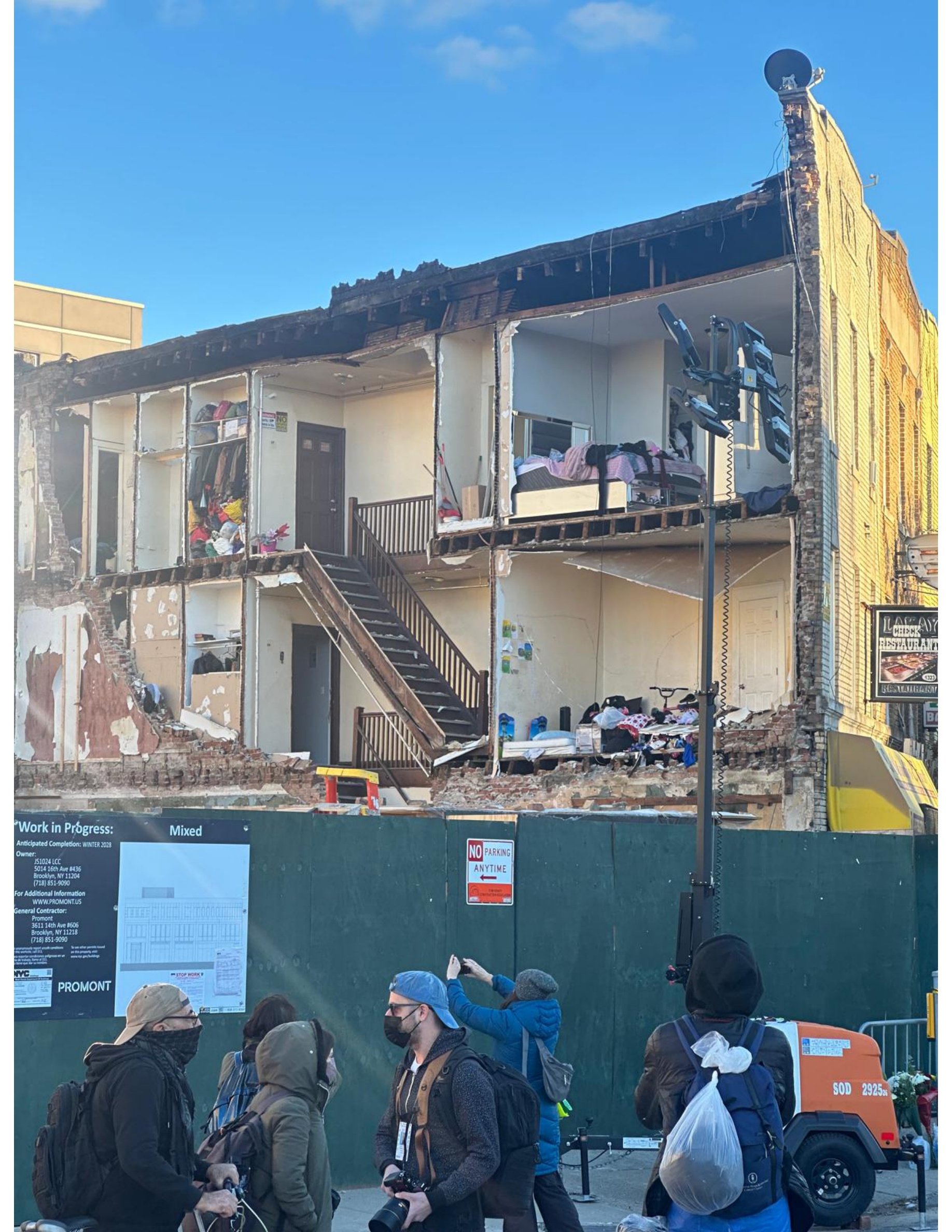
On November 11, 2026, a building collapsed in Flatbush, Brooklyn, claiming eight lives, including two children and two construction workers. Eighteen others were injured, neighboring apartments were damaged, and families were displaced. The tragedy has left a community grieving and searching for answers.
For those who live and work in Brooklyn, the collapse raises concerns that extend beyond one building or construction site. How are neighboring buildings protected when construction takes place nearby? What safeguards should be in place for workers and residents? And what can people do when they notice signs that a building may be unsafe?
As investigators work to determine what caused the collapse, these questions are especially important in neighborhoods where new development takes place alongside homes and businesses that have stood for generations.
What Happened in the November 11 Flatbush Building Collapse?
According to ABC7 New York, the collapse occurred shortly after 4 p.m. at 1321 Flatbush Avenue, near Bedford Avenue.
The three-story building, which contained residential apartments and ground-floor commercial space, collapsed into an adjacent construction site at 2625 Bedford Avenue, where excavation work was underway. Part of a neighboring building at 1323 Flatbush Avenue was also severely damaged, leaving apartments exposed to the outside.
Emergency crews searched through the rubble into the following day. Eight people died, including two children and two construction workers, and 18 others were injured. Several households required emergency assistance after being displaced.
New York City's Department of Buildings issued a stop-work order for the adjacent construction site while officials investigated the collapse.
According to the Associated Press, city officials expanded their response by ordering inspections at more than 160 construction sites associated with entities linked to the neighboring project and bringing in an independent engineering firm to review the collapse.
The cause of the collapse has not yet been conclusively determined. Although investigators are examining the surrounding construction activity and the building's condition, the presence of excavation work does not, by itself, establish what caused the structure to fail.
For the families who lost loved ones, those recovering from injuries, and residents unable to return to their homes, the consequences are already profound.
Why Building Safety Matters to Brooklyn's Neighborhoods
Across Brooklyn, new residential developments and commercial construction projects often take place beside older apartment buildings, neighborhood businesses, and long-established homes.
In communities such as Flatbush, where generations of families have built their lives, construction safety affects more than the people working at a job site. It also matters to tenants, neighboring property owners, pedestrians, and others who rely on the safety of surrounding buildings.
Older buildings are not inherently unsafe. Still, when excavation, demolition, or major construction occurs nearby, the condition of existing structures and the potential effects of that work require careful consideration.
A serious structural failure can have consequences beyond physical injuries. Families may lose access to their homes and personal belongings. Business owners may face unexpected closures, while displaced residents struggle to find somewhere safe to stay.
These concerns make the protection of neighboring properties and building occupants an essential part of construction safety.
How Can Construction Near an Existing Building Create Safety Risks?
Excavation is a routine part of many construction projects. Before a foundation can be built, workers often need to remove soil and prepare the ground for construction.
When excavation takes place beside an existing building, disturbing the surrounding soil can affect the stability of its foundation if appropriate precautions are not taken.
New York City's Department of Buildings excavation safety guidance identifies precautions that may be necessary, including shoring, bracing, protective barriers, and inspections for signs of structural distress.
These measures help address hazards such as shifting soil, unsupported excavation walls, and damage to neighboring properties.
The precautions needed depend on the particular project. Excavation depth, soil conditions, groundwater, construction methods, and the condition of adjacent buildings can all affect how work must be planned and performed.
Whether any of these factors contributed to the Flatbush collapse remains a question for investigators.
What Protections Exist for Construction Workers and Nearby Residents?
New York City has building and construction safety requirements intended to protect workers, building occupants, neighboring properties, and the public.
The New York City Building Code establishes requirements for excavation and construction activities, including measures to protect adjoining structures. Contractors and other responsible parties must comply with applicable safety standards, permit requirements, and approved plans.
Construction workers also have protections under New York labor laws and workplace safety regulations. Depending on the work involved, these requirements can address protective equipment, structural safeguards, and precautions against dangerous job-site conditions.
The responsibility to account for construction risks does not end at the property line. Work that affects surrounding soil or structures can also create dangers for people who have no involvement in the construction project.
When an accident occurs, determining whether safety requirements were followed can involve reviewing engineering plans, inspection records, site conditions, construction methods, and the responsibilities of those involved.
The legal protections available to injured construction workers can differ from those available to residents, pedestrians, or neighboring property owners. In every situation, the circumstances matter, and a serious accident does not automatically establish negligence or legal liability.
What Should Brooklyn Residents Do If They Notice Signs of Structural Problems?
Residents do not need to be familiar with construction or engineering to recognize that something about their building has changed.
New or worsening cracks, unusual building movement, falling masonry, or walls that appear to be shifting can warrant attention, particularly when construction is underway nearby.
Not every crack or vibration indicates an immediate structural emergency. Still, noticeable changes that raise concerns about a building's stability should not be ignored.
New York City provides several ways to report potentially unsafe conditions:
- Call 911 if there is immediate danger. A building that appears to be collapsing, falling debris that presents an immediate hazard, or other signs of imminent danger require emergency assistance.
- Report non-emergency structural concerns through 311. Residents can report shaking or vibrating buildings, leaning structures, cracked or bulging walls affecting stability, and other potentially unsafe conditions. When reporting a concern, provide the location and describe the changes you have noticed.
- Document concerns when it is safe to do so. Photographs, dates, descriptions of changes, and records of complaints can help establish when problems were first noticed.
- Notify the property owner or building management. Tenants should report concerns promptly and keep copies of written communications.
Residents should never enter an unsafe area or delay leaving a potentially dangerous building to take photographs or gather belongings.
The city's 311 unstable building guidance provides additional information about reporting structural concerns and recognizing situations that require emergency assistance.
Reporting potentially dangerous conditions can help bring concerns to the attention of the appropriate authorities before a situation becomes more serious.
For residents and families directly affected by the November 11 collapse, the city also provides information and assistance resources, including details about affected properties, emergency alerts, and the Brooklyn Building Collapse Relief Fund.
What Happens After a Building Collapse in New York?
Following a serious building collapse, emergency response and recovery efforts are only part of what happens next.
Investigators may examine construction permits, inspection histories, engineering documents, witness accounts, photographs, and physical evidence to determine how the structure failed.
Their findings can help establish whether applicable safety requirements were followed, whether warning signs were present, and whether additional precautions should have been taken.
For those directly affected, the immediate priorities are often more personal: recovering from injuries, finding safe housing, replacing belongings, or coping with the loss of a family member.
Depending on the circumstances, workers injured on the job may qualify for workers' compensation benefits or have other legal remedies available. Injured residents and others affected by unsafe building conditions may have different legal options. These questions require an examination of the individual circumstances rather than assumptions about what caused the collapse.
As the investigation continues, understanding what happened will be essential to determining whether safety requirements were followed and what measures could help prevent similar incidents.
Brooklyn Families Deserve Safe Homes, Workplaces, and Neighborhoods
The November 11 collapse has brought heartbreaking loss to Flatbush and the wider Brooklyn community. Our thoughts are with the families mourning loved ones, those recovering from injuries, and the residents whose lives have been disrupted.
At Roger Victor Archibald, PLLC, we recognize how deeply incidents like this affect the neighborhoods we serve. As a Brooklyn law firm, we believe that helping residents understand construction safety, their legal rights, and the protections intended to keep their communities safe is an important part of serving our neighbors. This includes providing information about New York laws related to construction accidents.
As officials continue their investigation, the focus must remain on supporting those affected, understanding what happened, and reinforcing the importance of safety for everyone who lives and works in Brooklyn.
If you have questions about your legal rights or concerns involving construction-related injuries or unsafe conditions, use our contact form to schedule a consultation with Roger Victor Archibald, PLLC.
Disclaimer: The articles on this blog are for informational purposes only and are no substitute for legal advice or an attorney-client relationship. If you are seeking legal advice, please contact the law firm directly.